What happens when a Danish SME takes its technology out of its comfort zone — and into a new market?
For 10 companies, the answer was not just exposure. It was clarity.
Through international Innovation pilots, Danish SMEs tested their solutions in real market environments — working directly with foreign partners to validate assumptions, adjust technology and understand what it truly takes to operate abroad.
The results span sectors and continents. But they share one common denominator: international testing changes decisions.
When validation becomes a turning point
Entering a new market often reveals what domestic success hides.
Technical standards shift. Procurement processes differ. Regulatory frameworks tighten. Customers ask different questions.
Structured pilot collaboration forces companies to confront those realities early — before scaling, hiring or investing heavily in expansion.
Across the participating companies, the pilots led to:
- Refined technologies and upgraded product versions
- New international partnerships
- Patent activity and certification preparation
- Clearer strategies for market entry
In some cases, the pilots accelerated commercial traction. In others, they clarified what needed to change before scaling further.
Methane detection in the United States: From concept to protected positioning
For NxPAS, international testing meant subjecting its methane detection technology to pressure testing in one of the world’s most demanding markets.
The company refined its compact, high-sensitivity detector in collaboration with US-based and international optical partners. The process resulted in a completed portable version tailored to market needs — and a submitted US patent application.
The pilot did not just validate performance. It shaped the company’s positioning in a market where methane monitoring is increasingly central to energy, agriculture, and industrial operations.
International testing moved the solution from technical promise to protected commercial potential.
Real-time pump monitoring in China’s water sector
For EWA Sensors, the challenge was different — but equally complex.
The company demonstrated its real-time pump monitoring solution at a Chinese water utility in collaboration with Tianjian Water. Operating in a highly regulated, technically demanding environment required more than mere proof of functionality.
The pilot delivered:
- Documented performance under real operational conditions
- Insight into Chinese regulatory and certification requirements
- A foundation for local presence and further market access
China represents one of the world’s largest water and wastewater markets. Testing the solution in a live utility setting provided EWA Sensors with both technical validation and critical market understanding.
International collaboration turned a scalable sensor solution into a market-informed strategy.
Rebuilding marine ecosystems through infrastructure
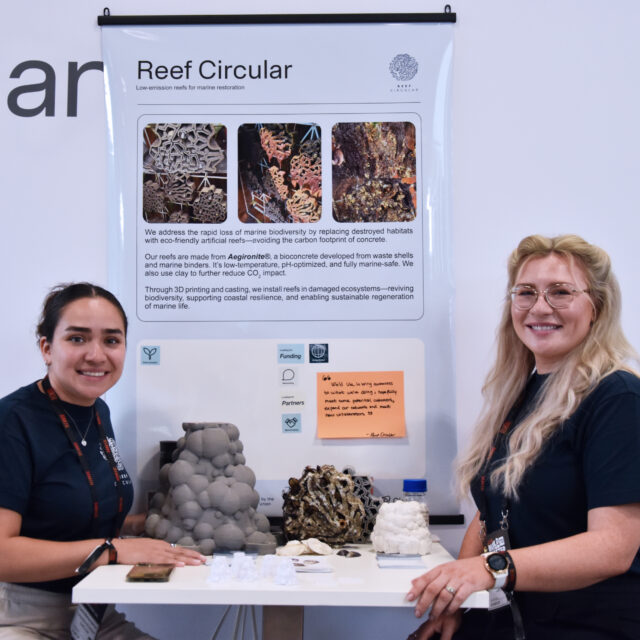
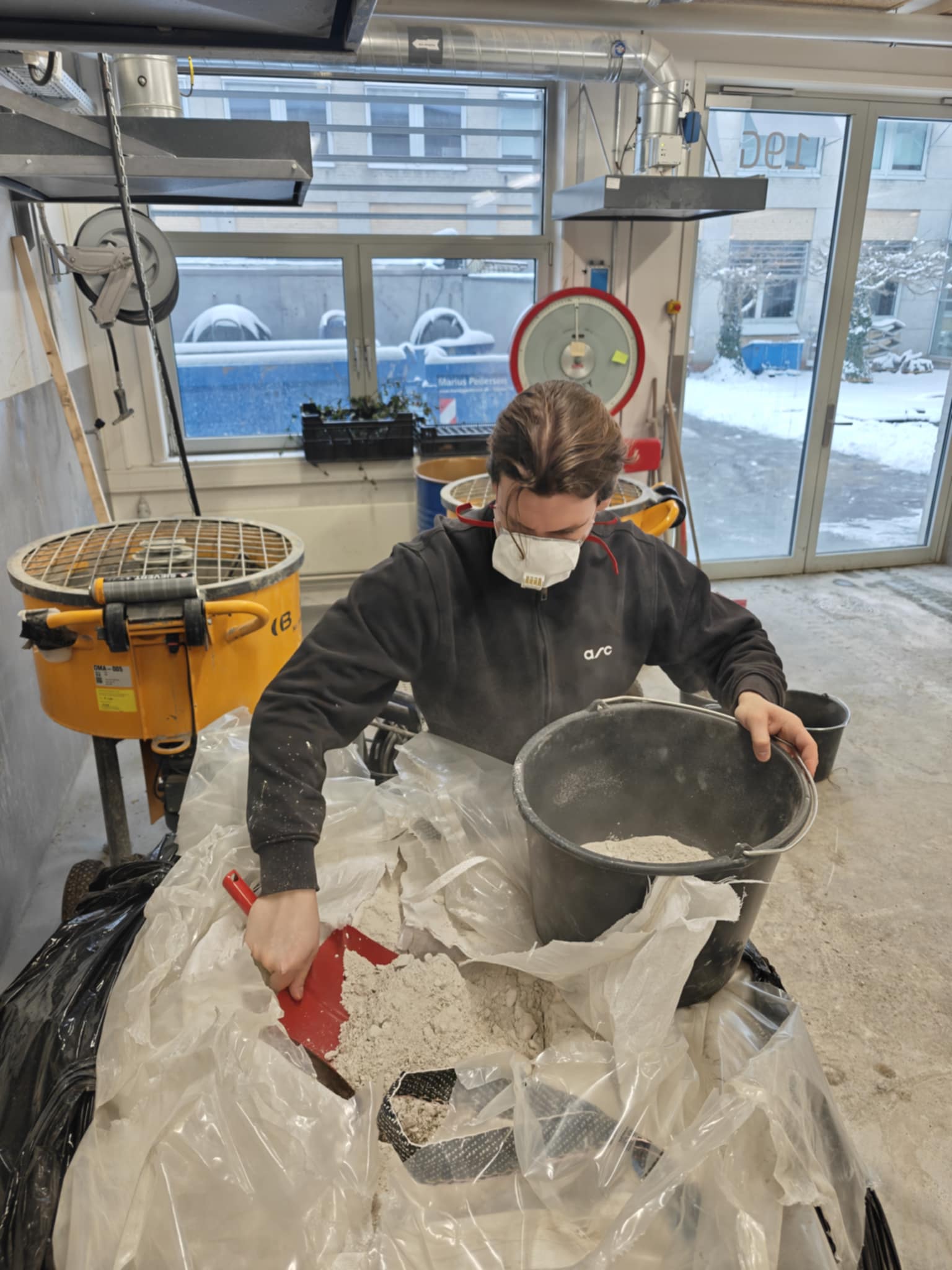
At the other end of the technological spectrum, Stonereefs worked on integrating biodiversity directly into maritime infrastructure.
Together with Holcim, the company developed and tested bioactive 3D-printed artificial reefs designed to function as structural elements in ports and offshore environments.
The collaboration produced a new bioactive composite material and valuable performance insights — forming the basis for future installations in Denmark and France.
The ambition was practical: infrastructure that does not merely avoid harm, but actively contributes to marine ecosystems.
International collaboration turned an idea for biodiversity enhancement into a tested, globally relevant material solution.
Different technologies. Similar outcome.
From sensors and emissions monitoring to advanced materials and nature-based infrastructure, the participating SMEs operate in very different domains.
Yet their experiences converge.
International pilot collaboration:
- Reduces uncertainty before scaling
- Exposes hidden regulatory and technical barriers
- Strengthens partnerships in target markets
- Improves the quality of strategic decisions
In short, it replaces assumptions with evidence.
For growth-oriented SMEs, that shift can determine whether internationalisation becomes an expensive experiment — or a structured expansion.
A practical pathway to international readiness
The International Innovation Pilot supports Danish SMEs with international potential in testing their solutions directly in collaboration with a foreign partner.
The objective is not theoretical analysis. It is a practical validation.
One SME. One international partner. A focused collaboration designed to clarify whether the solution is ready — and what must change if it is not.
Looking ahead
For the companies involved, international testing was not the final step. It was a decisive one.
New partnerships have been formed. Technologies have matured. Strategic directions have been sharpened.
And most importantly: decisions are now based on real-world insight.
What is International Innovation Pilot?
With support from the International Innovation Pilot, companies can test their ideas in practice with an international partner. The results will provide new knowledge and experience that can determine whether the technologies are ready for the next step in an international market.
The scheme gives Danish SMEs the opportunity to test and mature new technologies or methods in collaboration with a foreign partner. Each project receives DKK 75,000 in support (co-financing allows up to DKK 100,000), typically runs for 2–12 months, and focuses on testing, prototyping, and preparation for export.
👉 Want to know more? Sign up for Funding Insider and get notified about upcoming funding opportunities.
About the funding
International Innovation Pilot is part of Clean’s cluster grant, funded by the Danish Board of Business Development and the Danish Business Authority with co-financing from the European Union.
Cluster organizations such as Clean are set up to bring together companies, knowledge institutions, and other players to strengthen collaboration and innovation. The aim is to help SMEs, in particular, develop new solutions, gain access to markets, and drive growth through strong networks.